College offers don’t come from touching 90 once. They come from an arm built to repeat it under a real workload. Reform builds the throwing efficiency and the capacity that make velocity durable. Individualized coaching from a Doctor of Physical Therapy.
Reform athletes have added 5–11 mph.
Throwing is one of the most violent movements the body can produce. When throwing efficiency breaks down, energy leaks from the lower half, the trunk fails to transfer force, and the arm overcompensates on every pitch. That’s overthrowing — asking the arm to do a job it was never built to carry alone. It costs you velocity on every throw — and it costs you more of it the deeper you get into a season.
No matter how much throwing efficiency improves, throwing puts an abnormal amount of stress through the arm. Efficiency lowers the cost of every throw — it never removes it. If the arm isn’t prepared to absorb what’s left, injury isn’t a matter of if — it’s when. That takes an arm care and throwing program built to prepare the arm for the workload it will actually see.
Luke came in topping 88 with elbow pain. We rebuilt his throwing efficiency and his arm from the ground up — he now tops 94 mph, pain-free. Proof that velocity and health are built together, not traded off.
We coach at a clinical, mechanistic level — the same biomechanics and workload science used to keep professional arms healthy. Two ideas drive everything.
The ligament’s limit is fixed. The torque a fastball produces is enormous. The one thing a pitcher can actually train is the muscle-tendon unit that absorbs that load — so that’s exactly what we build.
What you threw this week versus what your arm has been prepared for. Too little and the tissue never builds; too much, too fast, and it breaks. We keep every athlete in the zone where stress drives adaptation without outrunning recovery.
One system, three connected pillars — because throwing efficiency and a durable arm are built together, not separately.
The foundation of everything. We build your ability to load and release energy up the chain — so the more efficiently your lower half works, the less your arm has to.
A stacked, stable trunk lets energy from the lower half transfer into the arm. We train the trunk to be the conduit, not the bottleneck.
We strengthen the arm in the exact positions it’s loaded during throwing — building an arm that’s resilient, not just rehabbed.
Long toss, velo phase, in-season routines, plus a lifting program — rebuilt every month around your arm, your season, your equipment.
Submit throwing film every week. Get a frame-by-frame answer on where your delivery leaks energy and where your arm pays for it.
Review the block, read the workload data, set the next focus area. Parents welcome on every call.
Sore after a start? Coach changed the schedule? Text Matt and adjust the plan the same day — before a small problem becomes a lost season.
Thirty minutes on Zoom with Matt. It’s an assessment, not a sales pitch — you leave with three things, whether or not you ever join the program.
Send throwing video when you book. Matt breaks down, frame by frame, where your delivery leaks energy — and where your arm pays for it.
Where your current throwing volume sits against what your arm is actually prepared for — and how close you are to the spike zone.
The one change that unlocks your next 2–3 mph. Named, explained, and yours to keep.
Book a 30-minute slot below.
Reply to the confirmation with recent throwing video.
Walk through your assessment — parents welcome on the call.
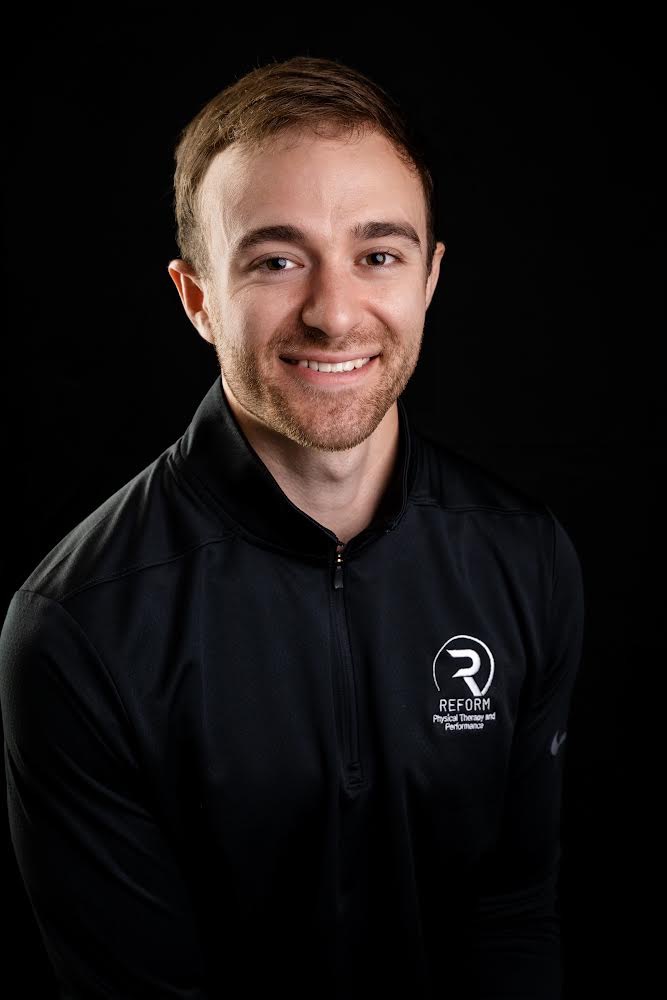
Reform is built by Matt Starkman, PT, DPT, CSCS — a physical therapist and strength coach who grew up fighting his own arm issues as a pitcher. He earned a doctorate in physical therapy, then spent years studying elite throwing mechanics and biomechanics.
The result is coaching that connects how your body moves to how the ball comes out — building the capacity underneath your velocity instead of chasing the radar gun.
Matt reviews every athlete’s film personally. That caps the roster — and it’s why the results above look the way they do.
A weekly lesson buys you an hour of coaching and six days of guessing. Reform gives you a plan for every day — what to throw, what to lift, what to recover from, and why. You are never sitting around between sessions wondering what to do next. Slow-motion video shows more than a naked eye at a bullpen ever will, and workload is tracked in numbers, not impressions. What virtual removes is the drive to a facility. What it keeps is the coaching.
Keep him. Reform doesn’t replace bullpen work or pitch design — it builds the throwing efficiency and the arm capacity that survive them. Most Reform athletes train with their team and a pitching coach at the same time; the throwing plan is built around that schedule, not against it.
Yes — in-season is when workload management matters most. The program shifts to in-season routines: maintaining arm strength, monitoring the acute-to-chronic ratio, and keeping velocity from decaying across a long spring.
Pitchers 14–23 — high school, college, and pro. The core of the roster is high-school pitchers preparing to be recruited.
A facility runs a group template and you travel to it. Reform is your film, your plan — fully individualized and built on the same workload science, with arm health as the first constraint. Velocity that costs you a UCL is not a gain.
Direct access to Matt, a seat on every monthly call, and straight answers about workload and risk from a Doctor of Physical Therapy. You will always know what your son is doing, why, and what the numbers say.
Thirty minutes on Zoom. Matt reviews the throwing video you send when you book, walks through where the delivery leaks energy, where the workload sits, and names the focus area — whether or not you join the program. It’s an assessment, not a pitch.
Velocity you can’t repeat doesn’t get you recruited, and an arm that fades in May doesn’t get you seen. Capacity is built in months, not weeks — which means the arm you want next spring gets built starting now.
The roster is capped so every athlete gets Matt’s eyes on their film each week. Arms are built in months, not weeks — different by next season means starting now.
The same first assessments from the free call — free, by email. Run them on yourself this week.